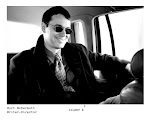
William Christie is in America's opera eye now,
because he is making his Metropolitan Opera debut
with Mozart's Cosi Fan Tutte.
He has conducted Mozart before, but he is better
known for his conducting of early opera, notably
for his conducting of the music of Claudio Monteverdi,
the composer who breathed life into the form.
The Les Arts Florissants production of Monteverdi's
Il ritorno d'Ulisse in patria*, conducted by William
Christie is the greatest operatic video production
I know of for any composer's work. I should make it
clear I am not making this claim based on the vocal
quality of the singers - which is very high - but from
the viewpoint of effective theater.
The Ritorno is perhaps the most neglected opera
in the repertory. It does not have the popularity of
Monteverdi's first opera, Orfeo, or the cache of
his final one, Poppea. I would compare it
storywise to a film noir of the late 1940s or early
50s such as Out of the Past.
To see the Ritorno, especially its stunning four
part duet finale, is to realize that opera could
have gone in a very different direction if the
music had not come to mean so much more
than the acting and the story, and especially
if the da capo aria had not come to dominate
the expression of emotion from the time of
Handel on.
To my unscholared mind, Handel's genius
forced opera away from to theater to the concert
hall. Compare his operas to Dido and Aeneas,
the last opera in the Monteverdian tradition still
performed today, and you can see how much
more direct and theatrical Purcell's opera is
than any of Handel's.
Given the Ritorno's neglected status and the general
dearth of early operas in performance,
Christie's production, admirably directed for
the stage by Adrian Noble of the Royal
Shakespeare Company, is especially important
as it shows the way to present this early music
with power and vitality.
I am linking to the finale. It starts with
Penelope's song of joy at Ulisses's return
follows through a more meditative passage
and back into joy before quieting down
like Joyce's Ulysses into the word, "yes"
as its final word. Monteverdi's is a much more
flexible way to express the changing emotions
of the human heart than the da capo aria,
which sacrifices complexity for hummability.
Monteverdi's sensibility is also much more modern
than traditional opera's. Yes, today our sensibility
is closer to Monteverdi's of 1640 than Puccini's a
hundred years ago. As William Christie said, an
audience comes out of a good production of
Monteverdi not only moved but also "bewildered
by the modernity".
*The production in question is Les Arts Florissants
first video production filmed in July 2002. There
is a very recent production of which I have only seen
excerpts.
Wednesday, November 17, 2010


Tuesday, November 16, 2010
The Beatles BreakUp! Why Bother?
- - -
• •
When my six year old son asked me today
"Why did The Beatles break up?" I realized
that for whatever other reasons they broke
up, The Beatles also broke up partly just
because they were the first rock super group.
They had no model for how to stop playing
together. The other super groups who emerged
in their wake such as The Rolling Stones
and The Who were not long in figuring out
that you could take breaks from playing with
each other without formally breaking up;
but once Paul realized that the other guys
didn't want to keep up with his pace anymore,
he seemed to see things in terms of either
breaking up or maintaining the Beatles' killing
recording pace.
In this way he seems to have been the Keith Richards
of the group, though their public personas were so
different. Richards' new biography, Life, shows he
also drove the Stones so hard no one else could stand
the pace. Still Richards was used to having to defer
publicly to the lead singer in a way Paul never had to
to John, giving the Stones more durability as a band than
the Beatles precisely, because they were less driven.
•
• •
When my six year old son asked me today
"Why did The Beatles break up?" I realized
that for whatever other reasons they broke
up, The Beatles also broke up partly just
because they were the first rock super group.
They had no model for how to stop playing
together. The other super groups who emerged
in their wake such as The Rolling Stones
and The Who were not long in figuring out
that you could take breaks from playing with
each other without formally breaking up;
but once Paul realized that the other guys
didn't want to keep up with his pace anymore,
he seemed to see things in terms of either
breaking up or maintaining the Beatles' killing
recording pace.
In this way he seems to have been the Keith Richards
of the group, though their public personas were so
different. Richards' new biography, Life, shows he
also drove the Stones so hard no one else could stand
the pace. Still Richards was used to having to defer
publicly to the lead singer in a way Paul never had to
to John, giving the Stones more durability as a band than
the Beatles precisely, because they were less driven.
•
Thursday, November 11, 2010
Citizens United & Judicial Politics
Perhaps the justices of the Supreme Court ruled
as they did on Citizens United not so foreign
donors and corporations could make unlimited
political donations with impunity, but so that
the justices such as Alito and their family members
such as Clarence Thomas's wife could?
Justice Alito has been indiscreet enough as to
attend conservative fundraisers, but who knows
what secret donations Justice Roberts and company
may be making with complete anonymity while
maintaining the myth of impartiality on the bench.
It's as if the referee were helping one team train
to use Justice Roberts' own metaphor. The question
continues to grow: Is Chief Justice Roberts going to
give Roger Taney a run for his money as the worst
Chief Justice in Supreme Court history? Will Citizens
United be his Dred Scott case?
as they did on Citizens United not so foreign
donors and corporations could make unlimited
political donations with impunity, but so that
the justices such as Alito and their family members
such as Clarence Thomas's wife could?
Justice Alito has been indiscreet enough as to
attend conservative fundraisers, but who knows
what secret donations Justice Roberts and company
may be making with complete anonymity while
maintaining the myth of impartiality on the bench.
It's as if the referee were helping one team train
to use Justice Roberts' own metaphor. The question
continues to grow: Is Chief Justice Roberts going to
give Roger Taney a run for his money as the worst
Chief Justice in Supreme Court history? Will Citizens
United be his Dred Scott case?
Sunday, November 7, 2010
Maternal Instinct & Death Mobiles
Everytime an SUV rounds too close to my
kids and I as we are crossing the street,
and I look up and see a mom - identifiable
by the back seat children's car seats,
sometimes filled with actual live children -
talking on a cell phone or texting, I wonder
what has become of that driver's maternal
instinct.
It's strange to strap your child carefully
into her car seat and then drive distracted.
The only explanation that comes to mind
is that most people when driving an SUV
or even a regular car don't really realize
the destructive potential of thousands of
pounds of steel and combustible fuel
hurdling along at speeds their ancestors of
even a 100 years ago hardly dreamed.
Automobiles are also death mobiles. The
convenience they bring us is bought at a
high price in many ways, but still of course
they can not move us through space as quickly
as a cell phone or Blackberry can.
While in an automobile, we're almost nowhere.
The car is a bubble which separates us from
the humans around us so we can move as quickly
as possible to another place; but a phone allows our
body to be in one spot and our mind in another.
Travelling in a car while speaking on a phone,
we're not even really present in the strange limbo
of the automobile itself; and we're certainly not
as mindful of those bodily around but
doubly excluded from our attention by car
and phone. Unfortunately, the vehicle with all
its destructive potential is actually there, and
if not minded can cause great harm or kill.
It's not an exaggeration to say humans need
attention; and unfortunately when someone
driving does not give it and others the attention
required, it can prove this point in dramatically
catastrophic fashion.
kids and I as we are crossing the street,
and I look up and see a mom - identifiable
by the back seat children's car seats,
sometimes filled with actual live children -
talking on a cell phone or texting, I wonder
what has become of that driver's maternal
instinct.
It's strange to strap your child carefully
into her car seat and then drive distracted.
The only explanation that comes to mind
is that most people when driving an SUV
or even a regular car don't really realize
the destructive potential of thousands of
pounds of steel and combustible fuel
hurdling along at speeds their ancestors of
even a 100 years ago hardly dreamed.
Automobiles are also death mobiles. The
convenience they bring us is bought at a
high price in many ways, but still of course
they can not move us through space as quickly
as a cell phone or Blackberry can.
While in an automobile, we're almost nowhere.
The car is a bubble which separates us from
the humans around us so we can move as quickly
as possible to another place; but a phone allows our
body to be in one spot and our mind in another.
Travelling in a car while speaking on a phone,
we're not even really present in the strange limbo
of the automobile itself; and we're certainly not
as mindful of those bodily around but
doubly excluded from our attention by car
and phone. Unfortunately, the vehicle with all
its destructive potential is actually there, and
if not minded can cause great harm or kill.
It's not an exaggeration to say humans need
attention; and unfortunately when someone
driving does not give it and others the attention
required, it can prove this point in dramatically
catastrophic fashion.
Thursday, November 4, 2010
Blood Buzz & Long Walk Home
I was listening to the sonic wave in the
middle of Blood Buzz Ohio
when I suddenly realized that the
beautifully textured instrumental break
reminded me of another song. It took me
several days to realize with surprise that
the song it resembled was Springsteen's
Long Walk Home.
Although the songs and the artists might
seem on first consideration about as different
as two "wall of sound productions" and
bands could be - Springsteen being a classicist
from the lost generation of rock n' roll and
The National being post modernists from
the contemporary splintered music world -
I soon saw the songs actually have some
incredible similarities.
Both have a political resonance; both have
main characters who no longer know and
are known at home; and both look to a
return journey as a response to alienation.
Though in the Springsteen song, there seems
more hope for the journey than in the Ohio
where things have grown desperate for our
loveless and deeply debt ridden hero, in neither
is the return at all certain.
The beautiful sonic wave of each song
doesn't so much carry our heroes forward
as flow against them as they try to beat their
way onward through the rising tide of
American Mediocrity.
* * *
middle of Blood Buzz Ohio
when I suddenly realized that the
beautifully textured instrumental break
reminded me of another song. It took me
several days to realize with surprise that
the song it resembled was Springsteen's
Long Walk Home.
Although the songs and the artists might
seem on first consideration about as different
as two "wall of sound productions" and
bands could be - Springsteen being a classicist
from the lost generation of rock n' roll and
The National being post modernists from
the contemporary splintered music world -
I soon saw the songs actually have some
incredible similarities.
Both have a political resonance; both have
main characters who no longer know and
are known at home; and both look to a
return journey as a response to alienation.
Though in the Springsteen song, there seems
more hope for the journey than in the Ohio
where things have grown desperate for our
loveless and deeply debt ridden hero, in neither
is the return at all certain.
The beautiful sonic wave of each song
doesn't so much carry our heroes forward
as flow against them as they try to beat their
way onward through the rising tide of
American Mediocrity.
* * *
Tuesday, November 2, 2010
The MidTerm Election
One thing is certain. For the next few days
we're going to hear a lot of silliness from
pundits and politicians about the meaning
of this election.
This midterm defeat for the Democrats
was inevitable from the moment Obama
was elected with a combination of such
high hopes - almost messianic among
some of his supporters - and such difficult
problems to overcome.
The next few days would be a good time
to take Nassim Taleb's advice and avoid
the newspapers, cable news channel and
NPR. It would be about as useful as
listening to the endless stream of banal
clichès streaming out of Republican
victors' mouths about "taking back the
country."
we're going to hear a lot of silliness from
pundits and politicians about the meaning
of this election.
This midterm defeat for the Democrats
was inevitable from the moment Obama
was elected with a combination of such
high hopes - almost messianic among
some of his supporters - and such difficult
problems to overcome.
The next few days would be a good time
to take Nassim Taleb's advice and avoid
the newspapers, cable news channel and
NPR. It would be about as useful as
listening to the endless stream of banal
clichès streaming out of Republican
victors' mouths about "taking back the
country."
Monday, November 1, 2010
Jack Aubrey, Master & Filmmaker
Strangely enough, the best series of books on
the life of a film director - as opposed to the craft -
are Patrick O'Brian's Aubrey-Maturin Sea Saga
set during the Napoleonic Wars.
Being a captain of ship at this time of total
naval war is a lot like being a director in this
time of total media saturation in that time is
neatly divided between the times you have a
command (a film) and the times you don't.
When you don't have a film (a ship), everything
becomes about obtaining your next project (command);
and then when you finally get a project, you are not
so much in control - at least not if your budgets are as
small as mine were on NIGHTINGALE IN A MUSIC
BOX and BLACK MAIL - as in a dance with chaos.
Ship's captains of that time were in a similar position
of having absolute authority - but only authority to
improvise in dealing with the chaos that the sea,
the weather and the enemy dealt their way.
Of course in the end, both captains and directors are
held responsible for the final results as if they really
did have control over the process.
Those made to be captains and filmmakers would not
trade the life for any other.
The first of the series is MASTER & COMMANDER.
the life of a film director - as opposed to the craft -
are Patrick O'Brian's Aubrey-Maturin Sea Saga
set during the Napoleonic Wars.
Being a captain of ship at this time of total
naval war is a lot like being a director in this
time of total media saturation in that time is
neatly divided between the times you have a
command (a film) and the times you don't.
When you don't have a film (a ship), everything
becomes about obtaining your next project (command);
and then when you finally get a project, you are not
so much in control - at least not if your budgets are as
small as mine were on NIGHTINGALE IN A MUSIC
BOX and BLACK MAIL - as in a dance with chaos.
Ship's captains of that time were in a similar position
of having absolute authority - but only authority to
improvise in dealing with the chaos that the sea,
the weather and the enemy dealt their way.
Of course in the end, both captains and directors are
held responsible for the final results as if they really
did have control over the process.
Those made to be captains and filmmakers would not
trade the life for any other.
The first of the series is MASTER & COMMANDER.
Subscribe to:
Posts (Atom)