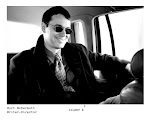
When I taught beginning filmmaking at Columbia College
Chicago, I used to tell my students that making a film was
like making a Frankenstein monster: the important test
was not how pretty the creature looked on the table but
whether life coursed through its veins once the cutting
and stitching were done.
When it comes to opera, it was Claudio Monteverdi
who found a way to breathe life into the new form.
What fascinates me about Monteverdi is that his
letters reveal a very uptight man, insecure, obsessed
with money and titles and at times pinched and
bitter; but in his music he is the least judgemental and
most generous of artists.
In his Il ritorno d'Ulisses a partria, based on The
Odyssey, Homer's villains become two young
lovers experiencing the joy and excitement of
first falling in love. In one of the most powerful
transitions in all opera, the two young lovers
sing of their joy right after Di Misera Regina,
Penelope's cry of anguish at just how painful
love can be. "You thought it so important to
punish the Trojans and have left me all alone."
It's archetypical Monteverdi to run love at its
most painful right into love at its freshest and
most exciting, and let the grinding of the two
coming into contact with each other create
the strongest of emotions within his listeners.
Those who endlessly worry over L'incoronazione
di Poppea, especially its portrayal of Nero and
Poppea as human lovers and not as unconscionable
monsters, do not understand that the unique power
of Monteverdi's work comes precisely from his
unflinching generosity towards the various motions
of the human heart.
Showing posts with label Il ritorno d'Ulisse in patria. Show all posts
Showing posts with label Il ritorno d'Ulisse in patria. Show all posts
Monday, November 22, 2010


Wednesday, November 17, 2010
William Christie & Il Ritorno di Monteverdi
William Christie is in America's opera eye now,
because he is making his Metropolitan Opera debut
with Mozart's Cosi Fan Tutte.
He has conducted Mozart before, but he is better
known for his conducting of early opera, notably
for his conducting of the music of Claudio Monteverdi,
the composer who breathed life into the form.
The Les Arts Florissants production of Monteverdi's
Il ritorno d'Ulisse in patria*, conducted by William
Christie is the greatest operatic video production
I know of for any composer's work. I should make it
clear I am not making this claim based on the vocal
quality of the singers - which is very high - but from
the viewpoint of effective theater.
The Ritorno is perhaps the most neglected opera
in the repertory. It does not have the popularity of
Monteverdi's first opera, Orfeo, or the cache of
his final one, Poppea. I would compare it
storywise to a film noir of the late 1940s or early
50s such as Out of the Past.
To see the Ritorno, especially its stunning four
part duet finale, is to realize that opera could
have gone in a very different direction if the
music had not come to mean so much more
than the acting and the story, and especially
if the da capo aria had not come to dominate
the expression of emotion from the time of
Handel on.
To my unscholared mind, Handel's genius
forced opera away from to theater to the concert
hall. Compare his operas to Dido and Aeneas,
the last opera in the Monteverdian tradition still
performed today, and you can see how much
more direct and theatrical Purcell's opera is
than any of Handel's.
Given the Ritorno's neglected status and the general
dearth of early operas in performance,
Christie's production, admirably directed for
the stage by Adrian Noble of the Royal
Shakespeare Company, is especially important
as it shows the way to present this early music
with power and vitality.
I am linking to the finale. It starts with
Penelope's song of joy at Ulisses's return
follows through a more meditative passage
and back into joy before quieting down
like Joyce's Ulysses into the word, "yes"
as its final word. Monteverdi's is a much more
flexible way to express the changing emotions
of the human heart than the da capo aria,
which sacrifices complexity for hummability.
Monteverdi's sensibility is also much more modern
than traditional opera's. Yes, today our sensibility
is closer to Monteverdi's of 1640 than Puccini's a
hundred years ago. As William Christie said, an
audience comes out of a good production of
Monteverdi not only moved but also "bewildered
by the modernity".
*The production in question is Les Arts Florissants
first video production filmed in July 2002. There
is a very recent production of which I have only seen
excerpts.
because he is making his Metropolitan Opera debut
with Mozart's Cosi Fan Tutte.
He has conducted Mozart before, but he is better
known for his conducting of early opera, notably
for his conducting of the music of Claudio Monteverdi,
the composer who breathed life into the form.
The Les Arts Florissants production of Monteverdi's
Il ritorno d'Ulisse in patria*, conducted by William
Christie is the greatest operatic video production
I know of for any composer's work. I should make it
clear I am not making this claim based on the vocal
quality of the singers - which is very high - but from
the viewpoint of effective theater.
The Ritorno is perhaps the most neglected opera
in the repertory. It does not have the popularity of
Monteverdi's first opera, Orfeo, or the cache of
his final one, Poppea. I would compare it
storywise to a film noir of the late 1940s or early
50s such as Out of the Past.
To see the Ritorno, especially its stunning four
part duet finale, is to realize that opera could
have gone in a very different direction if the
music had not come to mean so much more
than the acting and the story, and especially
if the da capo aria had not come to dominate
the expression of emotion from the time of
Handel on.
To my unscholared mind, Handel's genius
forced opera away from to theater to the concert
hall. Compare his operas to Dido and Aeneas,
the last opera in the Monteverdian tradition still
performed today, and you can see how much
more direct and theatrical Purcell's opera is
than any of Handel's.
Given the Ritorno's neglected status and the general
dearth of early operas in performance,
Christie's production, admirably directed for
the stage by Adrian Noble of the Royal
Shakespeare Company, is especially important
as it shows the way to present this early music
with power and vitality.
I am linking to the finale. It starts with
Penelope's song of joy at Ulisses's return
follows through a more meditative passage
and back into joy before quieting down
like Joyce's Ulysses into the word, "yes"
as its final word. Monteverdi's is a much more
flexible way to express the changing emotions
of the human heart than the da capo aria,
which sacrifices complexity for hummability.
Monteverdi's sensibility is also much more modern
than traditional opera's. Yes, today our sensibility
is closer to Monteverdi's of 1640 than Puccini's a
hundred years ago. As William Christie said, an
audience comes out of a good production of
Monteverdi not only moved but also "bewildered
by the modernity".
*The production in question is Les Arts Florissants
first video production filmed in July 2002. There
is a very recent production of which I have only seen
excerpts.
Wednesday, April 21, 2010
The Forgotten Kingdom, The Tragedy of the Cathars
Over the past three weeks, MILLENIUM OF MUSIC has introduced American Early Music Listeners to the most important recording of Early Music since February 24, 2004, the day of happy memory for those of us who love Monteverdi and longed for one good production - instead we got a great one - of one of his operas on tape. It was on 02/24/2004 that Virgin Classics released William Christie's and Adrian Noble's production of Il ritorno d'Ulisse in patria, perhaps the greatest production of opera for video ever released.
The incredibly moving new recording from Jordi Savall and Hesperion XXI is The Forgotten Kingdom, The Tragedy of the Cathars on Alia Vox. It could also be called The Forgotten Music, and for most of us - even those of us who already have a strong interest in music before Bach - our whole picture of the history of western music will be irreparably changed.
This project is incredibly devastating in showing that so much beauty could be wiped out completely and yet strangely inspiring in that such fragments as are shored up here of a lost beauty can still prove so moving.
In the end there is a paradox at the heart of Cathar music. You would not think a people who believed that the material world was evil would be capable of creating works of such heart-wrenching beauty.
∞
The incredibly moving new recording from Jordi Savall and Hesperion XXI is The Forgotten Kingdom, The Tragedy of the Cathars on Alia Vox. It could also be called The Forgotten Music, and for most of us - even those of us who already have a strong interest in music before Bach - our whole picture of the history of western music will be irreparably changed.
This project is incredibly devastating in showing that so much beauty could be wiped out completely and yet strangely inspiring in that such fragments as are shored up here of a lost beauty can still prove so moving.
In the end there is a paradox at the heart of Cathar music. You would not think a people who believed that the material world was evil would be capable of creating works of such heart-wrenching beauty.
∞
Subscribe to:
Posts (Atom)